
As an Amazon Associate I earn from qualifying purchases.
Your cat may spend the afternoon judging a cardboard box, ignoring an expensive bed, or claiming the warmest chair in the house. It is easy to forget that animals just like that have also inspired religious devotion, shared voyages with sailors, and drawn crowds of admirers.
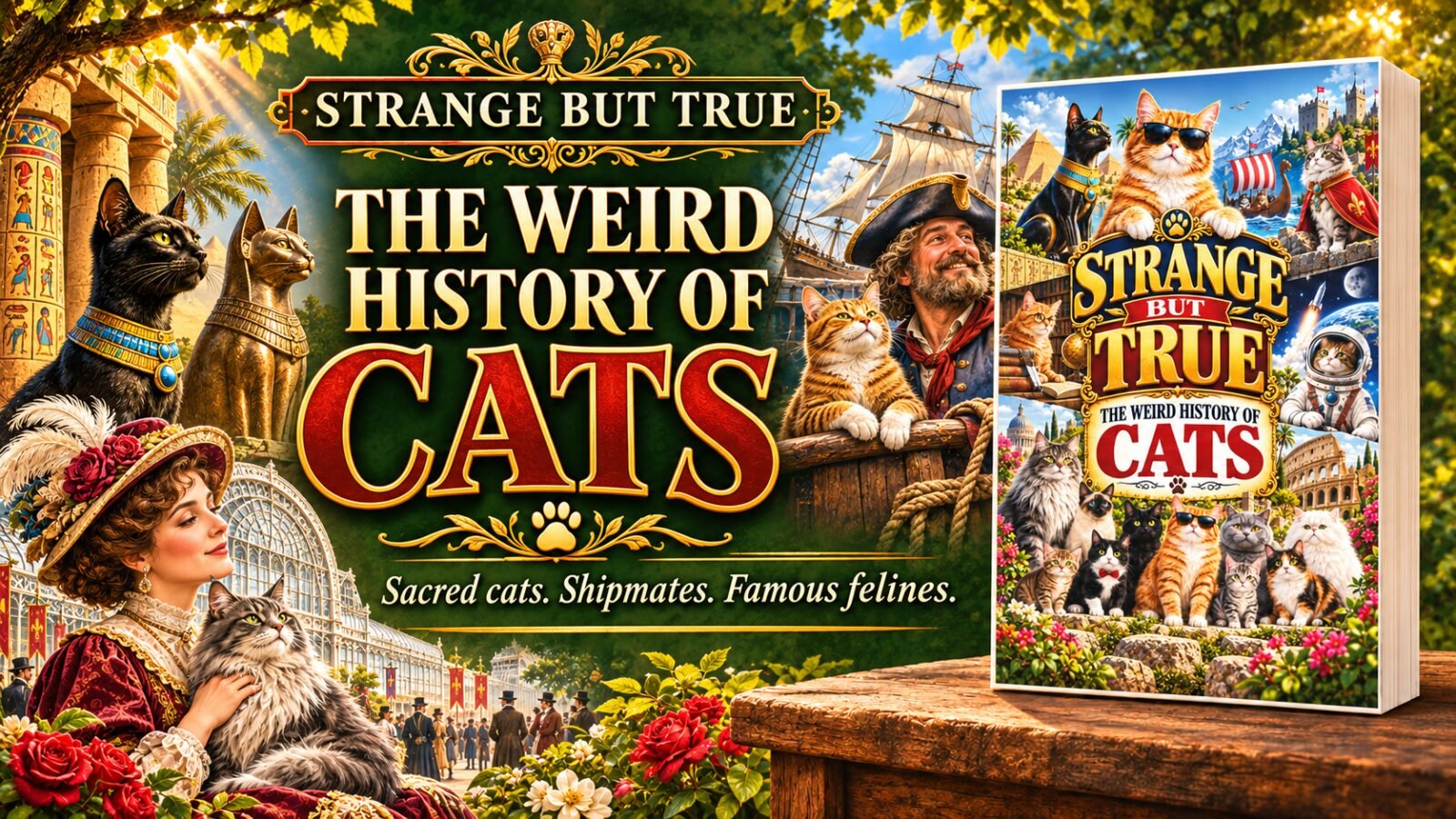
Strange But True: The Weird History of Cats follows that wonderfully broad fascination. Our paperback is for cat lovers who enjoy the stories around their favorite animals—the unexpected jobs, powerful symbols, memorable personalities, and human enthusiasms that make feline history so entertaining.
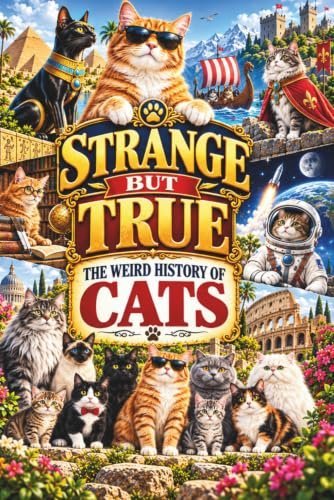
Explore The Weird History of Cats in paperback on Amazon →
This article features our own book and contains Amazon affiliate links. If you purchase through a link, we may earn a commission at no extra cost to you.
A Cats Book with Plenty of Human Character
The full subtitle offers a good introduction to the book’s range: Sacred Cats, Witchcraft, Ship Cats, Strange Breeds, Famous Felines, Nine Lives, Internet Stars, and Other Bizarre Cat Stories.
That is a long journey for an animal that may object to moving off a cushion. It also explains the appeal of the subject. Cats have occupied so many different places in human life that their history brings together belief, work, fashion, companionship, and fame.
Some of the most interesting questions concern the people around them. Why did a cat become a sacred symbol? What did a ship’s crew value in its feline companion? How did showing off a beloved pet become a public spectacle?
Here are three glimpses into the wider history that make cats such a rewarding subject to read about.
When a Cat Could Represent a Goddess
A seated cat can look remarkably dignified, especially when it has no intention of responding to you. In ancient Egyptian art, that poised shape could carry a religious meaning.
The Metropolitan Museum of Art explains that cats were sacred to Bastet, a protective goddess who could be represented in feline form. Its account of a small metal cat statuette describes adornments including pierced ears and a protective amulet. Figures of this kind could serve as offerings at temples or be placed in catacombs. Explore the Met’s cat statuette and explanation of Bastet.
A familiar animal had become a way to express ideas about protection and divine power. For a modern cat lover, the combination of watchfulness, composure, and importance may feel surprisingly recognizable.
Simon: A Ship’s Cat with a Remarkable Record
Other cats earned their place in history through work and companionship. Simon of HMS Amethyst is a particularly memorable example.
PDSA’s account describes how Simon was wounded when the ship came under fire on the Yangtze in 1949. After recovering, he resumed catching rats that threatened the ship’s limited food supplies. He was also valued for the comfort his presence brought to the crew. His service earned him the PDSA Dickin Medal. Read PDSA’s record of Simon and his award.
His story brings the idea of a ship’s cat down to an individual animal. Alongside the practical value of a good mouser, there was a relationship with people sharing a difficult situation. A cat could be both a working companion and a welcome piece of everyday life.
The Victorian Cat Show That Attracted Too Many Admirers
Public enthusiasm for cats did not have to wait for the internet. A letter from George Grove to Charles Darwin, dated July 15, 1871, captures a much earlier crowd of feline admirers.
Writing after the Crystal Palace cat exhibition, Grove reported that attendance had exceeded expectations and that crowding prevented some visitors from seeing the cats. He also asked Darwin whether a future exhibition could be useful to science. The Darwin Correspondence Project identifies the show as having taken place on July 13, 1871. Read Grove’s letter about the Crystal Palace cat show.
It is a lovely historical detail: the organizers had planned an exhibition, and the public turned up in inconvenient numbers. The attraction of looking at someone else’s cat was already strong enough to create a logistical problem.
Why This Paperback Is for More Than History Enthusiasts
There is a special pleasure in discovering that an animal you know so well has connections to worlds you have never considered. A cat curled up beside you becomes a starting point for stories about temples, ships, exhibitions, and the people who made room for cats in their lives.
The Weird History of Cats is a choice for readers who enjoy that kind of discovery. The subtitle’s mix of sacred cats, strange breeds, famous felines, folklore, and internet stars makes the book a natural fit for someone whose curiosity extends beyond everyday pet care.
It can also make a thoughtful print gift for a cat lover who already has enough mugs, ornaments, and things with paw prints on them. Give them something to read while the cat investigates the wrapping.
Discover The Weird History of Cats in Paperback
If sacred felines, ship cats, famous personalities, and the stranger corners of our relationship with cats sound like your kind of reading, explore Strange But True: The Weird History of Cats.
View your next cat read in paperback on Amazon →
Keep Exploring Catnip Meow Hub
- Meet famous internet cats
- Explore cat breed profiles
- Capture your own cat’s character with photography
As an Amazon Associate I earn from qualifying purchases.